
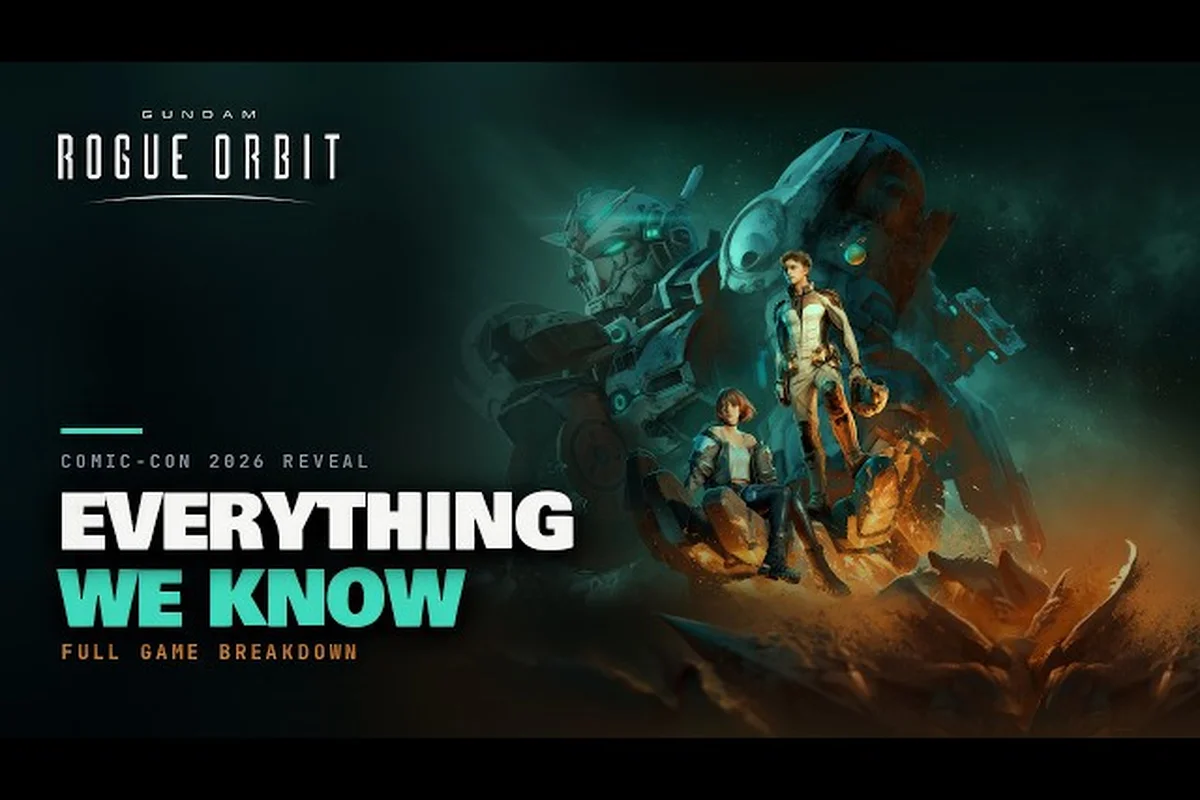
GUNDAM ROGUE ORBIT drops you into the cockpit of the Gundam Helix as ace pilot RE-X, where every run blends high-speed space combat with roguelike progression and permanent unlocks. Knowing your controls, your run structure, and how loadouts evolve between attempts is the difference between an early wipe and a clean sweep through the Stellarvane campaign. This complete guide breaks down everything a fresh pilot needs before the March 2027 launch — the on-screen layout, the run loop, and the early-game decisions that shape long-term power.
GUNDAM ROGUE ORBIT Controls and Core Inputs
The control surface in GUNDAM ROGUE ORBIT splits into three layers: mobility inputs, combat inputs, and Vii assist inputs. According to the official GUNDAM ROGUE ORBIT announcement, Vii is a Haro-style intelligent assist unit built exclusively for the Gundam Helix, so learning when to call on it matters as much as knowing your primary fire groups. The Steam listing confirms full DualSense and DualShock support, with the Steam Cloud carrying your bindings across machines, so a layout you tune on PC travels with you.
Default Control Layout
The table below maps the default bindings surfaced on the Steam product page and community previews. PC players on keyboard-and-mouse get a dedicated dash and brake, while pad players can toggle aim sensitivity on the fly.
| Action | Keyboard Default | Gamepad Default | Notes |
|---|---|---|---|
| Main Fire (Rifle) | Left Mouse | RT | Hold to charge beam |
| Sub Fire (Missile/Vulcan) | Right Mouse | RT + LT | Swaps per loadout |
| Boost Dash | Space / Shift | B / Circle | Short-range vector dash |
| Boost Brake | C | L3 | Hard cancel for emergencies |
| Lock-On Toggle | Q | Y / Triangle | Cycles nearest enemy |
| Vii Assist | F | RB | Cooldown-based |
| Melee / Tackle | E | X / Square | Stagger on hit |
| Menu / Map | Tab | Start / Options | Pause + mission log |
Movement Deep Dive
Boost Dash is your primary repositioning tool in any GUNDAM ROGUE ORBIT run, and it consumes a regenerating Boost Gauge that recharges fastest when you hold still for roughly half a second. Boost Brake cancels momentum instantly, which lets you bait enemy fire and snap back into cover during boss transitions. When you chain three dashes back-to-back, the game enters a brief Overboost state where the fourth dash adds a damage bonus on your next melee, so movement is never divorced from combat output.
Combat Layer
Lock-On Toggle is more than a targeting reticle in GUNDAM ROGUE ORBIT — it also feeds the Vii Assist system. If Vii is already on cooldown, marking a new target queues the next assist automatically, which is why experienced pilots keep one finger near the lock button even when they're kiting adds. For more granular weapon-by-weapon timing, the GUNDAM ROGUE ORBIT weapon skills breakdown walks through the optimal windows for each fire group.
How a Roguelike Run Unfolds
GUNDAM ROGUE ORBIT structures every run as a five-stage loop drawn from a randomized mission table, with each stage bookended by a choice node and a shop tier. The roguelike layer lives on top of a narrative campaign aboard the Stellarvane and a cast that includes Sofia, Big Paul, and the knight commander Elaine, so a failed run still moves the broader story forward via dialogue drops and unlock flags. Because run modifiers are seeded at launch, you can plan a build around a specific stage order rather than reacting blind, which makes the run guide approach much more deliberate than a pure chaos roguelike.
Run Structure at a Glance
| Stage | Objective | Mid-Stage Reward | End-Stage Reward |
|---|---|---|---|
| 1 — Skirmish | Clear 3-4 enemy packs | Small credit cache | Weapon mod (Common) |
| 2 — Escort / Defend | Protect the Stellarvane shuttle | Health kit | Mod (Uncommon) or Pilot Boon |
| 3 — Boss Mini-Engagement | Sub-boss or elite squad | Guaranteed rare drop | MOD Skin token |
| 4 — Sector Hazard | Environmental threat + waves | Buff choice (2 of 4) | Pilot ability shard |
| 5 — Final Engagement | Run-ending boss | Full heal | Permanent unlock token |
The Choice Node
Between every two stages, a choice node offers three randomized options: a weapon mod, a pilot boon, or a support chip that alters how Vii behaves in combat. The exact tier of each option scales with how cleanly you cleared the previous stage, because GUNDAM ROGUE ORBIT tracks an internal style score based on time-to-clear, damage taken, and dash count. This score doesn't just pad a leaderboard — it directly determines the rarity ceiling of the next node, so defensive play is rewarded in material terms, not just feel-good numbers on a result screen.
How Runs Tie to Progression
A run ends in one of three ways: a Victory (clear the Stage 5 boss), a Retreat (extracted before the boss, keeping half your score and any unlocked tokens), or a Wipe (mobile suit destroyed, you keep only permanent unlocks). The three outcomes feed into a different progression pipeline, and understanding the loop is a core part of any run guide for GUNDAM ROGUE ORBIT. For a deeper look at how those resources convert into account-wide unlocks, the GUNDAM ROGUE ORBIT unlock guide maps the full token economy.
First-Day Quick Start for New Pilots
The first hour in GUNDAM ROGUE ORBIT throws a lot of jargon at you — MODs, Boons, Tokens, and a buff-screen wall of stats — but the loop itself is approachable if you follow a tight quick start sequence. Most veterans recommend focusing on three habits in the opening run: never waste Vii Assist on trash mobs, always check the style score after each stage, and only spend credits at the Stage 3 shop because it carries the best odds of rare mods. The game is designed so the first three runs are essentially a tutorial, so don't optimize too early and instead build a feel for the dash-cancel and lock-on rhythm.
Pre-Run Checklist
Before you launch your first sortie, confirm these settings so a single session doesn't blow up your muscle memory later.
-
Sensitivity — Drop pad look sensitivity by one notch; the default tends to feel snappy at close range but sloppy during boss transitions.
-
Auto-Lock — Leave it ON for the first run; turn it OFF in run two once you understand reticle placement.
-
Vii Aggression — Set to "Defensive" for early runs; the assist should peel enemies off you, not overextend.
-
Camera Shake — Lower to 30% so the Boost Brake feedback doesn't blur long-range target tracking.
-
HUD Opacity — Set boss health bars to 100% and minimap to 70% to avoid information overload.
First Three Runs, On Purpose
| Run | Focus | Target Outcome |
|---|---|---|
| Run 1 | Learn dash-cancel and melee timing | Reach Stage 3, no item optimization |
| Run 2 | Lock-on discipline + Vii Assist rotation | Reach Stage 4, finish with a positive style score |
| Run 3 | First full clear attempt | Beat Stage 5 boss with any loadout |
When to Spend Credits
Credits are the soft currency you earn in every run, and the best practice is to save them for the Stage 3 shop because the random mod pool there includes two of the four rare-tier options in the game. The Stage 5 shop, by contrast, only sells consumables and cosmetics, which makes it a worse target for credit-funded upgrades. The GUNDAM ROGUE ORBIT quick start sequence becomes much smoother once you treat credits as a Stage 3 piggy bank rather than a Stage 1 impulse buy.
Loadouts, Mods, and Build Identity
Every run in GUNDAM ROGUE ORBIT begins by selecting a frame chassis (light, standard, or heavy) and a primary weapon archetype (rifle, melee-focused, or missile-vulcan hybrid). Mods earned during the run slot into a fixed grid of six mod sockets, and pilot boons stack additively on top of those, which means your build identity is roughly 60% mods and 40% pilot boons by the time you reach Stage 4. Because mods are lost between runs, the meta shifts as you unlock more chassis and archetypes, so a "best build" mindset is less useful than a "best plan for the current run" mindset.
Chassis Comparison
| Chassis | Boost Gauge | Armor | Signature Mod | Best Stage 5 Matchup |
|---|---|---|---|---|
| Light Frame | 120% regen | Low | Afterburner Trail | Mobile sub-bosses |
| Standard Frame | 100% regen | Medium | Reactive Plating | Most elite squads |
| Heavy Frame | 70% regen | High | Anchor Stabilizer | Stationary siege bosses |
Weapon Archetype Breakdown
The three primary weapon archetypes interact differently with the Vii Assist system, and the choice often matters more than the chassis because of how Overboost chains into your fire group. A rifle-primary build, for example, rewards keeping distance and letting Vii draw aggro, while a melee-focused build flips that relationship and uses Vii to set up tackle windows. If you want a tactical deep dive on each archetype, the GUNDAM ROGUE ORBIT combat tips guide breaks down the timing windows per weapon.
MOD Rarity and Sockets
Mods come in four rarities — Common, Uncommon, Rare, and Prototype — and the grid has a fixed structure of two offensive, two defensive, and two utility sockets. Prototype mods drop exclusively from Stage 4 and Stage 5 bosses, and they often define a build's identity because they can change the rules of an archetype (for example, a Prototype rifle mod that turns charged beams into piercing lines). If you're looking to climb the build ladder fast, the GUNDAM ROGUE ORBIT meta guide lists which Prototype mods the community currently rates highest.
Progression Between Runs and Difficulty Settings
Progression between runs in GUNDAM ROGUE ORBIT sits on three rails: pilot level (account-wide XP), unlock tokens (one-time rewards for beating the Stage 5 boss), and mobile suit licenses (gated by pilot level plus story milestones). The combination means a new player who wipes ten times can still climb a difficulty tier by virtue of pure XP gains, while a skilled player who retreats early will lag in unlock tokens but stay ahead in style score. The GUNDAM ROGUE ORBIT settings guide walks through how each difficulty level reshuffles enemy aggression and reward density.
Difficulty Tier Snapshot
| Tier | Enemy HP | Style Score Multiplier | Token Reward |
|---|---|---|---|
| Cadet | 100% | x1.0 | Standard |
| Veteran | 130% | x1.25 | +1 bonus |
| Ace | 165% | x1.5 | +2 bonus + Prototype drop chance |
| Rogue | 200% | x2.0 | +3 bonus, exclusive cosmetics |
How Tokens Flow
Unlock tokens earned at the end of a successful run can be spent in the Helix Bay, the hub area on the Stellarvane, on permanent unlocks like new chassis skins, pilot voice packs, and additional mod slots. Tokens never expire and roll over between sessions, which means even a long losing streak will eventually fund a meaningful upgrade if you keep clearing Stage 4. The broader narrative, including the Gundam Card Game promo card that ships with the Launch Edition, ties into the same hub progression loop, so the roguelike layer is intentionally woven into the package rather than bolted on.
The Endgame Loop Explained
Once you've cleared Ace difficulty, GUNDAM ROGUE ORBIT unlocks the Rogue Orbit mode, a weekly rotating challenge set with fixed loadouts and a global leaderboard. The mode is the long-tail content that justifies the roguelike structure because every run uses the same frame and weapon, so the only variable is your execution, your style score discipline, and how cleanly you chain Overboost windows into the final boss. For pilots who want to refine their general approach before the leaderboard reset, the GUNDAM ROGUE ORBIT improvement guide has a checklist of small adjustments that compound across runs.
This complete guide covers the controls layer, the run structure, the loadout identity system, and the progression rails that keep GUNDAM ROGUE ORBIT playable in short or long sessions. The March 2027 launch on Steam, PS5, and Xbox Series X|S will give players the same control surface, the same five-stage loop, and the same Helix Bay economy, so the habits you build now will carry over directly once the game goes live.
Frequently Asked Questions
What is the best chassis for a brand-new player in GUNDAM ROGUE ORBIT?
The Standard Frame is the best starting chassis because its 100% boost regeneration and medium armor let you learn dash-cancel timing without the punishing low regen of the Light Frame or the slow pivot speed of the Heavy Frame. It also accepts any mod archetype, so you won't waste sockets while you're still learning the mod economy.
How long is a single roguelike run in GUNDAM ROGUE ORBIT?
A clean run from launch to the Stage 5 boss takes roughly 25 to 35 minutes for an average player, while speedrunners on the community Discord report sub-15-minute clears once they've mastered the Overboost chain. A wipe or retreat cuts that time in half, which is why the roguelike layer works so well for short play sessions.
Do I keep mods and weapons between runs?
No, mods and pilot boons reset every run, but you do keep pilot level XP, unlock tokens, and any permanent chassis licenses you've earned. Mods only persist within a single run, which is why the choice node between Stage 2 and Stage 3 is the most important decision point in the entire loop.
Can I change difficulty mid-campaign?
Yes, you can swap between Cadet, Veteran, Ace, and Rogue from the settings menu at any time, and the change takes effect on the next run. Difficulty doesn't lock you out of story milestones, but it does change the token reward multiplier, so most players move up a tier once they consistently clear Stage 4.
Is there local co-op in GUNDAM ROGUE ORBIT?
The Steam listing confirms online co-op and multiplayer support, but the game is built primarily around online sessions rather than split-screen. Co-op runs use a shared Boost Gauge economy, so coordinated dash-cancel timing matters even more than it does in solo play, and the Stage 5 boss gets extra health scaling per additional player.